There’s been a lot of talk in the news about supply chain issues. But what does it mean to those who are in health care – and how do you optimize the healthcare supply chain strategy for your facility?
All medical facilities can benefit from maximizing the way they handle their healthcare supply chain management. Let’s talk about what a supply chain does, how to implement hospital supply chain management best practices and how you can go about optimizing supply chain strategies for your medical facility.
As you learn more about healthcare supply chain management in healthcare, you’ll see the importance of maintaining data integrity, buying efficiently, managing stock levels, refining product formulary, consolidating market share and actively engaging clinical stakeholders. The inability of small clinics and rural hospitals to access the best pricing reserved for larger high-compliance organizations is certainly a pain point. Pointcore can help with healthcare supply chain services that save you time and money.
Table of Contents
What Is a Healthcare Supply Chain Strategy?
In a nutshell, a healthcare supply chain strategy involves handling the flow of medical supplies from the manufacturer to providers and patients. Having a nimble operating system in place for your healthcare supply chain enables you to increase productivity and efficiency while decreasing costs. With all of the issues facing hospitals today, battling supply chain management issues has become more important than ever.
A proper hospital supply chain process flow ensures that healthcare organizations have what they need when they need it. Just as importantly, good management reduces waste by ensuring the right supplies are ordered – not just the least expensive ones – and by using up medical supplies before they expire. When medical professionals have what they need at hand, they can put their focus where it matters most – on their patients.
Managing Your Healthcare Supply Chain Strategy
Your facility or organization may have a working health supply chain strategy, but is it optimized to reduce waste, standardize care and increase revenue? Following are hospital supply chain management best practices that can benefit all medical facilities, from major medical institutions to small rural hospitals.





Hospital Inventory Management
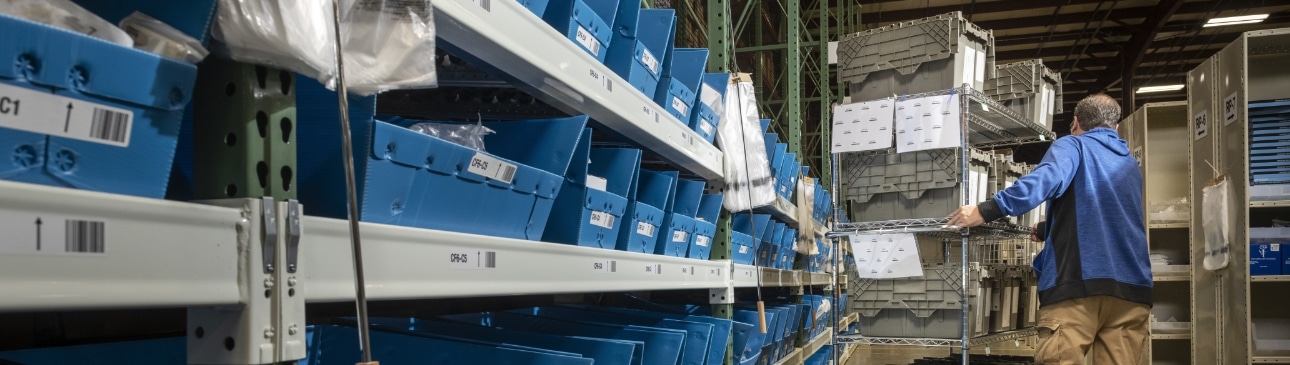
A hospital is a hectic environment, with many day-to-day details that must be managed by your staff as you struggle to meet one demand after another. However, when supplies aren’t adequately managed, you risk losing revenue and cutting into profit margins when expiration dates come and go. That’s why it’s essential to your hospital supply chain strategy that inventory logistics be managed efficiently.
By having a dependable inventory control system, you can:
- Order quantities that reflect what your staff is actually using and help them manage the myriad of categories they interact with.
- Provide visibility to product standardization and conversion lag.
- Maintain low (but adequate) inventory levels
- Have enough supplies to manage patient care
- Make the best use of your storage area
- Keep costs down
- Help mitigate variation in patient care.
Cost Accounting System
An effective healthcare supply chain strategy includes having an effective pricing system in place. Your system needs to process comprehensive information for actual costs and incremental expenses for each service you provide – including things like Medicare cost allocation and the charge-to-cost ratio for your products and services.
It’s crucial to capture, track and manage data analytics on the labor, supplies and other expenses incurred by your facility. Helpful hint: Keep an eye on the prices surrounding facilities are charging and compare them to yours to ensure you’re being competitive. Investing in tools that provide insight into pricing and opportunities for cost reduction is beneficial.
Physician Preference Items
One of the areas with the highest impact to cost and patient care is Physician Preference Items. These are the supplies used in your procedural areas, where physician input to product selection is vital. Physician Preference Items are often the most expensive supplies used in a healthcare system, as well. These can range from implants (arthroplasty implants, spinal hardware, osteobiologics, cardiac rhythm management devices, neurostimulators, etc.) but can also be the host of supporting disposables (endomechanical stapling, advanced bipolar hand pieces, hemostatic agents, etc.). These products also have the most direct impact on patient outcomes. Therefore, engaging your physicians for direct dialogue surrounding these is crucial.
However, engaging physicians can be daunting. Pointcore can assist your organization by developing the proper forums for physician engagement. We can help your supply chain leadership and their clinical peers come to the discussion with robust data and empirical insight. Physicians are competitive and use data-driven decision-making daily. They want to be high-value contributors to margin but must keep their aim on quality outcomes. By engaging physicians with robust cost, utilization and efficacy data, you can establish a clinically preferred product formulary and drive market share consolidation to yield a competitive cost basis. Best practice is creating lasting physician engagement intersecting with value analysis forums.
Technology & Automation
By investing in the latest automation tools and data analytics, you’ll take the sting out of hospital supply chain management, reducing waste, increasing productivity, facilitating greater transparency and fostering data-driven decisions.
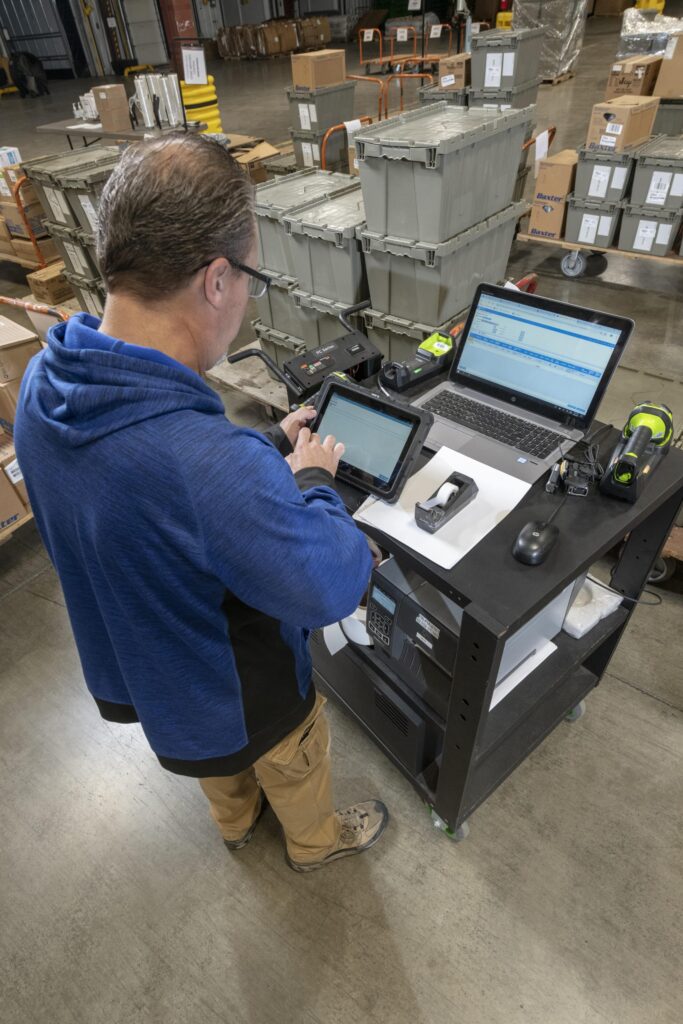
Through the use of Premier ERP, your supply chain can realize mobile functionality to allow real-time req submission, delivery signatures and physical inventory streamlining. Beyond mobile device functionality, Premier ERP can offer granular visibility to:
- Usage patterns
- Inventory movement
- Pricing
Pointcore is also pushing the limits of emerging technology to create predictive replenishment models to drastically reduce the labor needed to refill point-of-use storage areas and product conformity towers to digitally monitor conversion lag.
Data Collection
The more information you have about your facility and healthcare industry practices, the better you’ll understand trends and opportunities to improve your healthcare supply chain strategy. You can also share these analytics with stakeholders so they understand your progress. When paired with Premier Spend Dashboard, the ERP data can yield market share data by contract category, allowing your organization to identify an array of standardization, contract and utilization opportunities.
Another Premier tool available to Pointcore members is Service Line Analytics, which marries supply chain preference card data with quality and EMR data to visualize utilization opportunities paired with peer outcomes. This elevates your healthcare supply chain strategy’s insight to have crucial conversations with the patient at the center of the discussion.
Pointcore Helps Optimize Your Healthcare Supply Chain Strategy With Purchasing Efficiencies That Save You Money
Your healthcare supply chain strategy can benefit from the scale and expertise that Pointcore brings. From contract management to procurement, Pointcore leverages the scale of a large healthcare system to impact your hospital supply chain with options to fit your needs.
Take advantage of the experience and purchasing power of Pointcore Supply Chain Services to keep your hospital supply chain running smoothly. Pointcore Supply Chain Services (PSCS) is a Premier Certified Sponsor of Affiliates with over 50 hospital members and over 1,200 nonacute members. Members benefit from two membership options that aggregate spend to reduce costs. The collaborative balances physician preference with a proven process that brings value to all members regardless of size. In addition, membership provides access to best-in-class analytics tools, contracting and more.
Pointcore can also help you develop a strategy to manage your nonclinical matters outside of direct patient care. Whether you need healthcare consulting, assistance with selecting or implementing IT systems for patient interaction, billing, or building construction, Pointcore is here for you. We serve many different healthcare facilities and hospitals, including critical access hospitals, and provide exceptional healthcare consulting across the country, including Missouri, Kansas, Tennessee, and Wichita City healthcare consulting, and more. Contact us today, and let us help you manage healthcare administration so you can focus on caring for your patients.
Frequently Asked Questions
How can Pointcore’s Perception improve healthcare supply chain management?
Perception, formerly known as Business Operations Command Center, gives healthcare leaders real-time visibility into operations by connecting data from supply chain systems, procurement and clinical workflows. This centralized platform identifies inefficiencies, tracks utilization and monitors key performance indicators across facilities. Consolidating these insights lets decision-makers respond to inventory trends faster, reduce waste and anticipate supply disruptions before they affect patient care.
What role does Healthcare Technology Management play in supply chain optimization?
Healthcare Technology Management ensures that medical equipment, digital systems and data infrastructure all function seamlessly within the supply chain ecosystem. Properly managed assets minimize downtime and extend the life cycle of high-value equipment. When integrated with supply chain analytics, HTM provides a full picture of operational health, linking procurement, maintenance and utilization data to strengthen financial and clinical outcomes.
How do Technology Services support healthcare supply chain efficiency?
Pointcore’s Technology Services help organizations connect and secure the digital systems behind their supply chain operations. From implementing ERP integrations to managing data networks and cybersecurity, these services ensure that information flows smoothly across departments. Reliable connectivity and automation lead to better forecasting and fewer manual errors, essential for an optimized healthcare supply chain strategy.