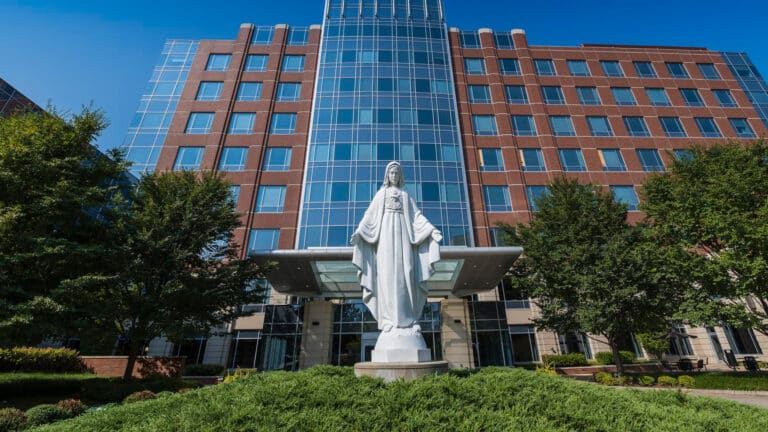
Healthcare infrastructure is foundational to safe patient care, but it often operates behind the scenes making it harder to evaluate, prioritize and fund. As health systems grow and facilities age, leaders need clearer insight into infrastructure performance to support informed, long-term decisions that protect operations and care delivery.
Pointcore partnered with OSF HealthCare Saint Anthony’s Health Center to bring structure and visibility to their infrastructure planning. The approach used helped leadership better understand risk, prioritize investment and align facility decisions with organizational goals.

CHALLENGE
OSF Saint Anthony’s faced increasing liability tied to aging infrastructure. Decades of deferred replacements combined with limited capital funding made it difficult to sustain essential systems. Each year, infrastructure requests were often overshadowed by more visible, revenue-generating initiatives such as operating room upgrades or new clinical equipment.
The challenge was compounded by fragmented asset tracking. Equipment age, maintenance history and lifecycle status were documented manually across disparate systems, limiting centralized visibility. Without reliable, systemwide insight, leadership struggled to justify infrastructure investments or prioritize projects based on risk, impact or long-term value.

SOLUTION
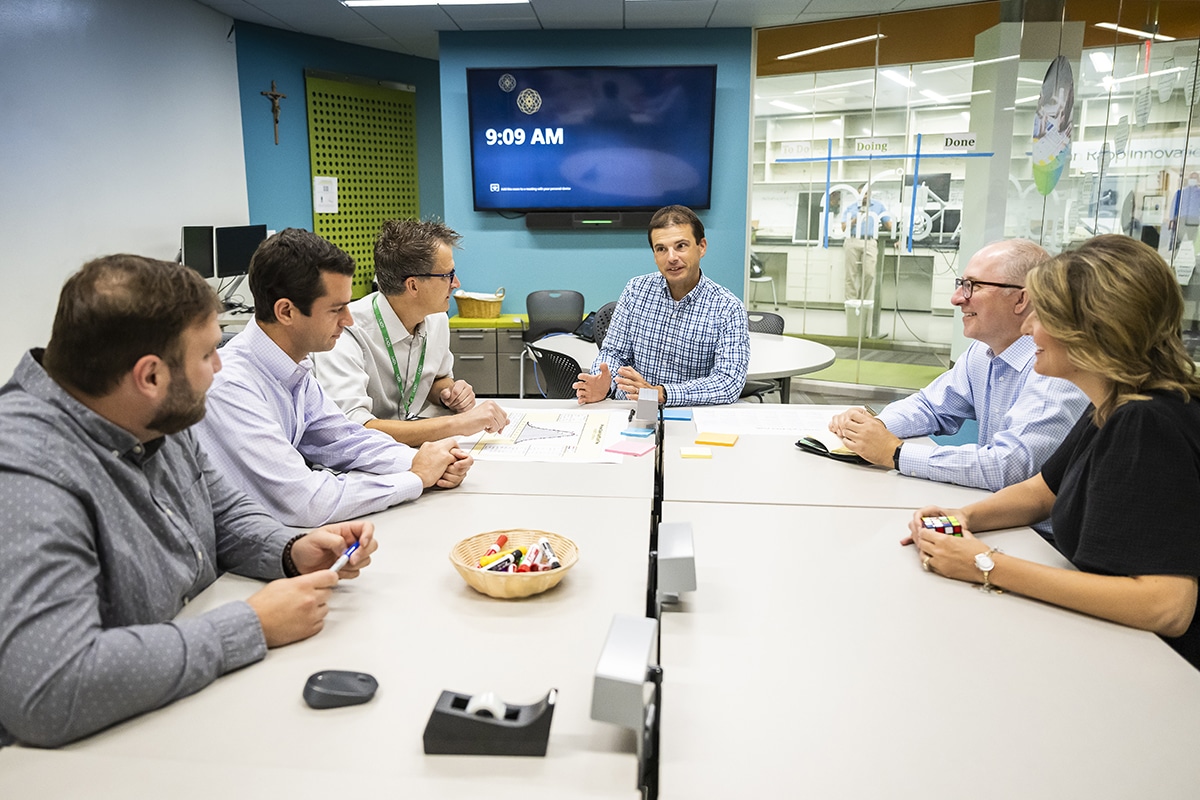
Pointcore partnered with OSF Saint Anthony’s leadership to change how infrastructure was evaluated and funded. The Pointcore team introduced a standardized scoring tool to measure asset risk across multiple factors, including age, code compliance, downtime, service line impact, redundancy and energy efficiency. Each factor was assigned a weighted value, enabling the calculation of an overall risk profile for every major asset.
Using this data, Pointcore supported the facilities team in developing detailed business models that translated infrastructure risk into clear business impact. These models captured downstream impacts such as lost revenue from downtime, increased maintenance costs and energy inefficiencies, while also demonstrating the return on investment of timely replacement.
This structured, data-driven approach established a consistent method for evaluating infrastructure needs and prioritizing capital planning.

RESULTS
The capital strategy transformation delivered immediate impact for OSF Saint Anthony’s and shifted infrastructure planning from reactive to proactive. By translating facility needs into a consistent, risk-based and financial framework, facilities leadership gained clarity and credibility into capital discussions.
As a result, executive leadership approved $5 million in capital funding in the first year to address high-risk infrastructure needs that had previously been deferred. To further support operational continuity, leadership also established a $200,000 non-threshold emergency capital fund, enabling the facilities team to respond to urgent failures without delaying patient care or disrupting clinical operations. This work directly supported the approval of a major infrastructure investment for a new central power plant, budgeted at $27 million, which will support capacity and campus growth.
The success at OSF Saint Anthony’s helped create a repeatable model for infrastructure evaluation across OSF HealthCare. Building on the approach used at this campus, facilities teams now develop rolling five- to ten-year capital plans aligned with enterprise strategy, with 16 infrastructure projects approved and underway in 2026.
Through Pointcore’s partnership, OSF shifted how infrastructure is understood and valued. Infrastructure is no longer viewed as a cost center, but as a strategic asset that protects revenue, supports compliance and sustains patient care. What began at one hospital has evolved into a scalable framework for smarter, more resilient facilities planning across the entire health system.
Don’t let aging infrastructure become a liability to patient care.
Learn how Pointcore helps healthcare leaders prioritize high-risk assets and secure the funding needed to protect long-term operations.
About OSF HealthCare
OSF HealthCare is a large, integrated health system founded by The Sisters of the Third Order of St. Francis, headquartered in Peoria, Illinois. OSF employs over 26,000 people and serves communities across Illinois and Michigan through 16 hospitals, 170+ locations and over 2,100 licensed beds. OSF also offers a variety of other services, including colleges of nursing, home health services, philanthropic foundations and more.
In the spirit of Christ and the example of Francis of Assisi, the Mission of OSF HealthCare is to serve persons with the greatest care and love in a community that celebrates the Gift of Life.